Discussion on the social role of theatre and Crippletrek in Rome
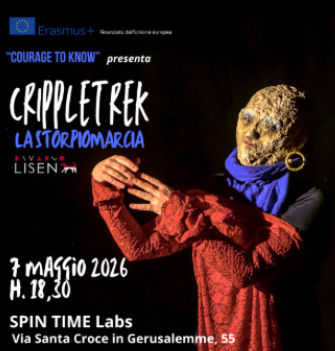
Crippletrek at Spin Time Labs in Rome
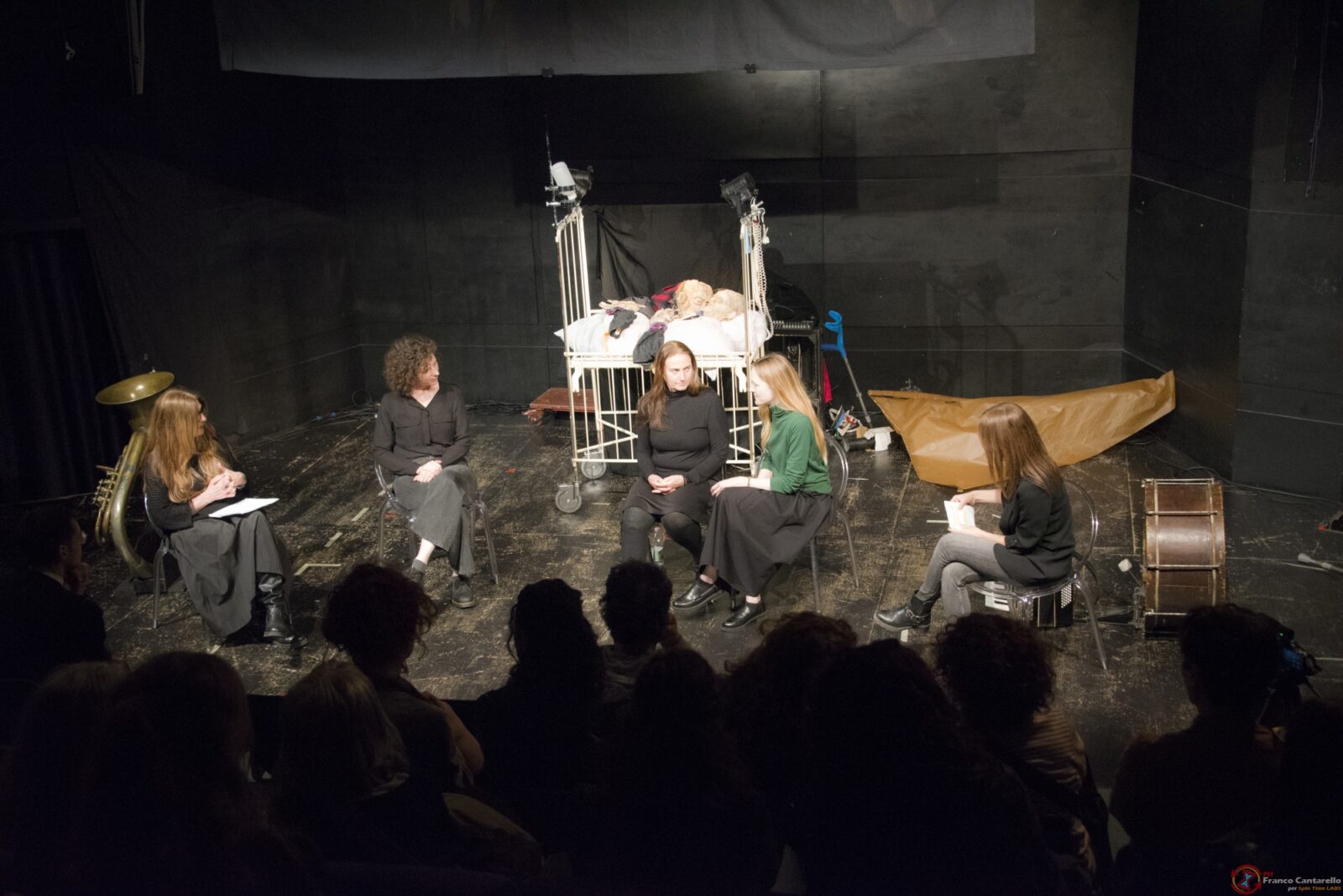
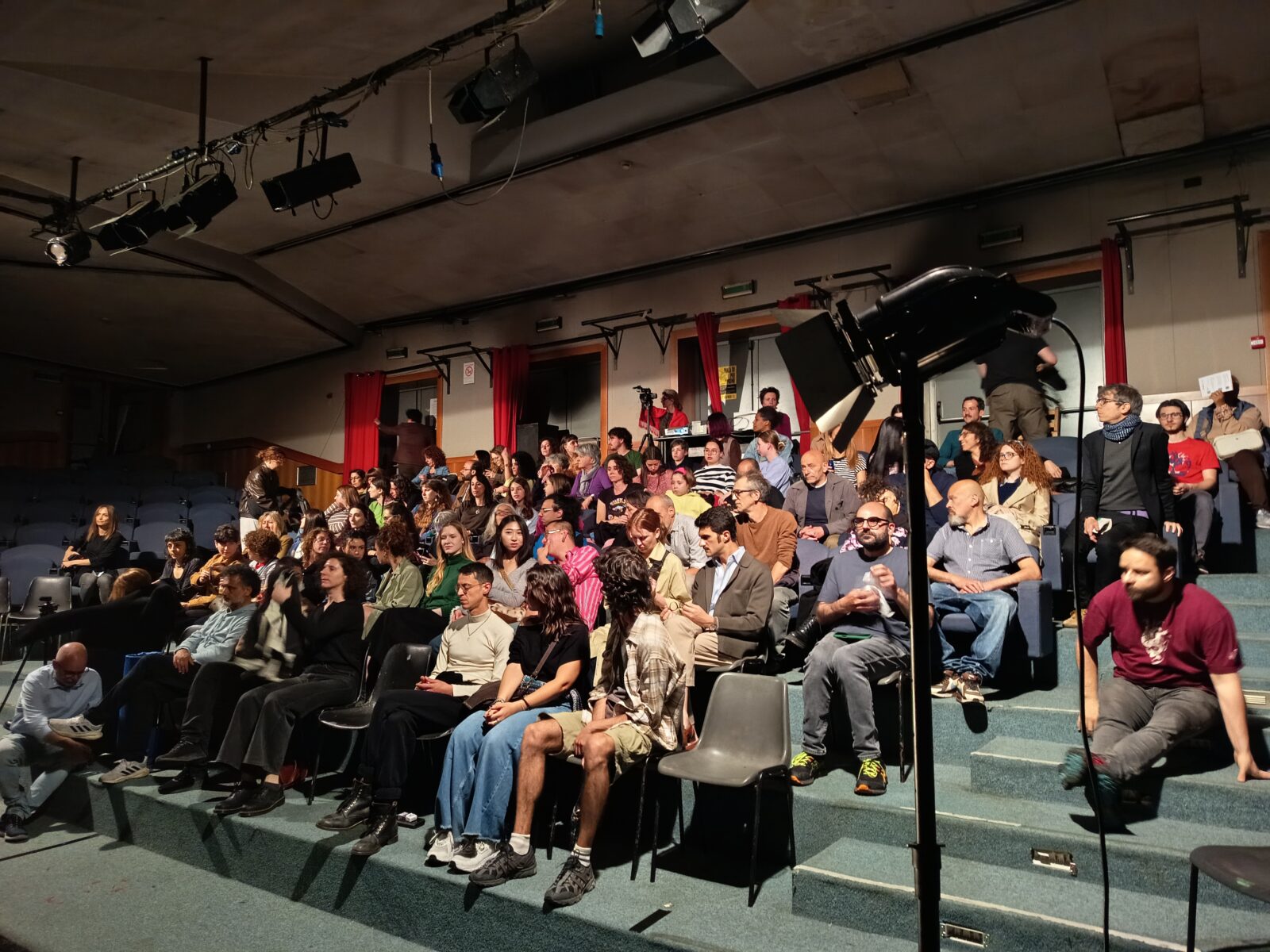
The performance will be followed by a discussion on the themes of the play.
Speaker: Cecilia Carponi
Theatre scholar and educator specializing in 20th-century European theatre, with a focus on acting, directing, and pedagogy. She is affiliated with Sapienza University of Rome and collaborates with a number of international projects and institutions. She is the author of scholarly studies and editor of publications on both contemporary and historical theatre.
The event is organized in collaboration with the project partner – Programma Integra
Report from Rome
… It was our first time performing in Rome. Cooperation with Programma Integra (represented above all by the excellent organisers Amalia Romano and Laura Biancon) resulted not only in successful presentations of our two productions. The Italian partners of the Courage to Know project also succeeded in connecting the themes of our performances with discussions involving remarkable people from both the human rights and theatre worlds.
Both perspectives came together in the person of Cecilia Carponi, who joined the discussion after CRIPPLETREK. This lecturer at Sapienza University and researcher in theatre history is also an activist and volunteer working in the unique space Spin Time Labs. In this seven-storey former office building, now home to around four hundred people of different nationalities, cultural, social and educational activities as well as community events take place. In the theatre hall located in the basement of this enormous squat, we performed CRIPPLETREK and then spoke about supporting poor people, refugees and homeless people in the heart of Rome…. full report
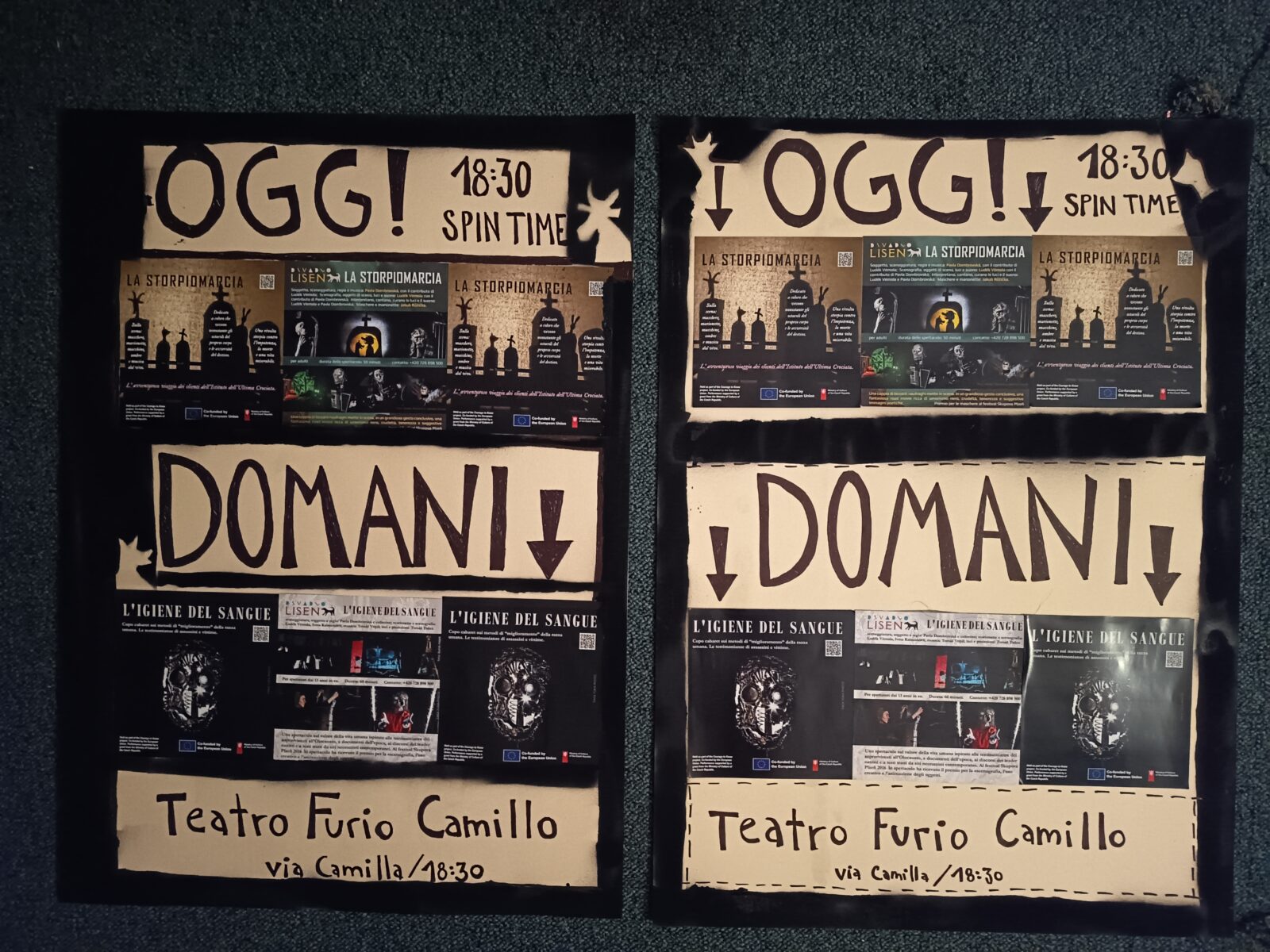
Last night at SPIN TIME LABS, in collaboration with Programma Integra, another performance capable of astonishing and drawing the audience deeply in took place: CRIPPLETREK – La Storpiomarcia by the Czech ensemble Teatro Líšeň.
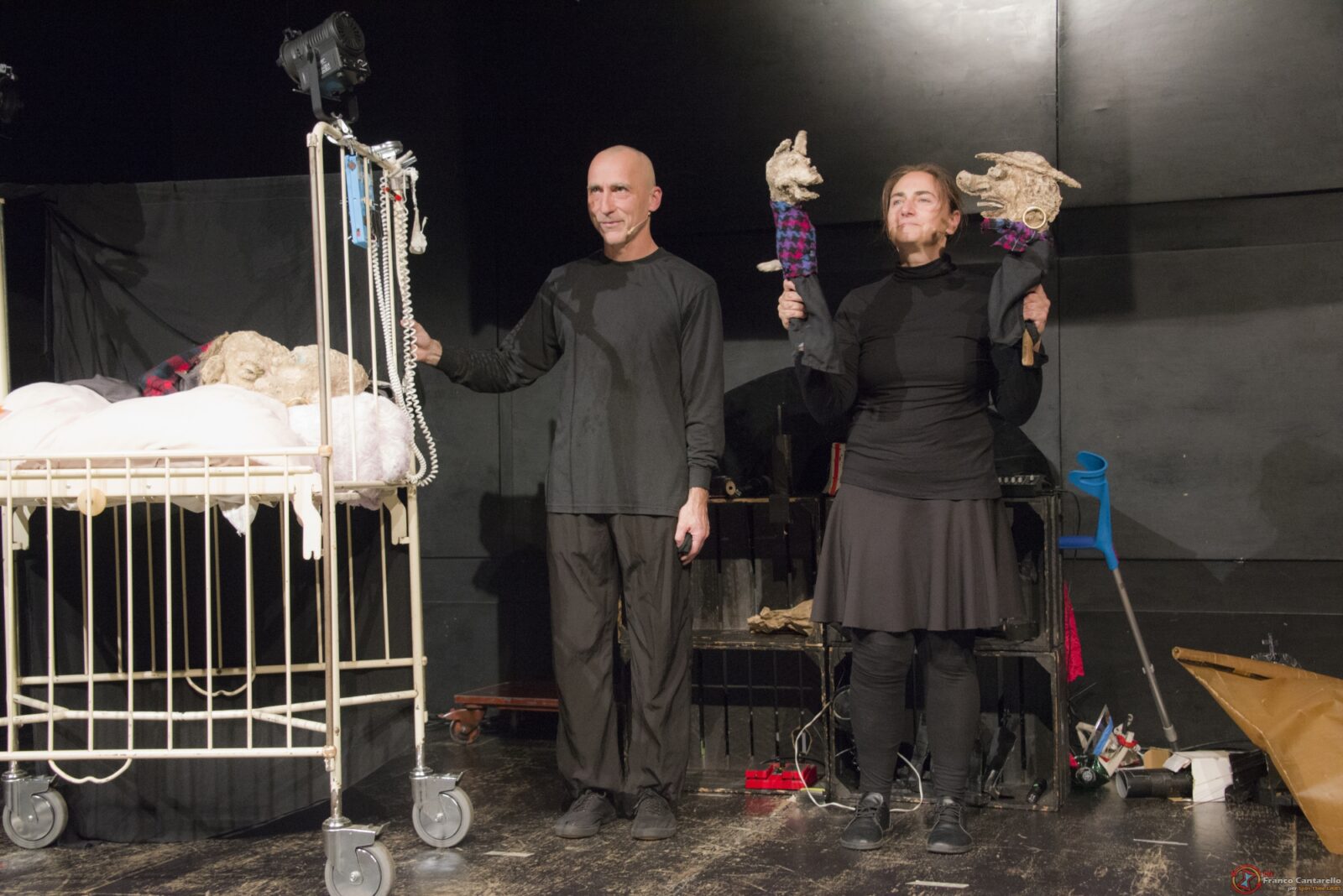
An intense, visionary and provocative journey leading the audience through a world of rebellion, fragility and human resilience. Masks, puppets, shadow play, stage machines and live music merged into a production of extraordinary visual power — an immersive spectacle capable of captivating both the eye and the imagination.
A theatre that does not merely tell stories, but creates entire worlds. A theatre that disturbs, surprises and invites the audience to surrender to images and emotions.
Photographing such an evening was a wonderful challenge: capturing lights, shadows, movement and constantly shifting details, and trying, at least in part, to convey the magic unfolding on stage.
Spin Time once again confirms itself as a place open to international culture, experimentation and encounters between different artistic languages. A living space, made possible by the daily commitment of those who continue to shape it into a place for art, community and humanity.
Thanks to everyone who makes all this possible.
Two days of profound emotions: this is what the performances CRIPPLETREK and BLOOD HYGIENE — two productions by Divadlo Líšeň presented in Rome — have left within us.
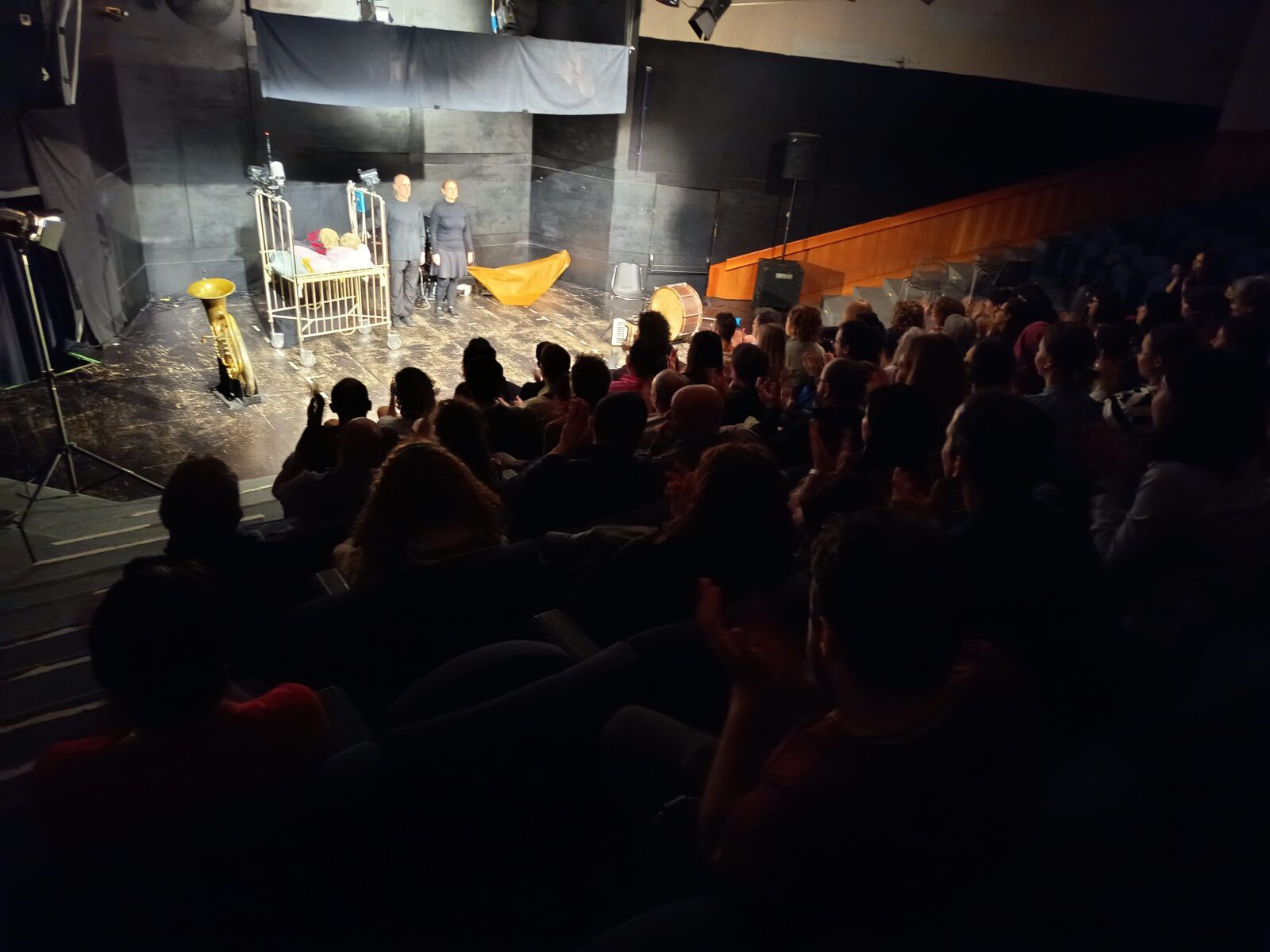
The evenings of 7 and 8 May were marked by surprise, discovery and the shared experience of the magic of unconventional storytelling together with the many spectators who attended the events.
For many of us, the theatrical language introduced by Divadlo Líšeň became a kind of “spectators’ initiation” — a new way of understanding both old and new stories through a narrative form that employs a complex language while remaining utterly immediate in its imagery and associations.
We marvelled, understood, sometimes interpreted things in our own way, and in the end completely surrendered ourselves to the brilliant direction, the mastery of both performers, and the fascinating masks and strange scenic objects, whether radiant or sombre.
Record of the discussion
Theatre as a Tool for Social Change and the Reflection of Taboos
Summary of the Discussion
The discussion featured director, writer and performer Pavla Dombrovská, Italian researcher in the field of social theatre Cecilia Carponi, and the event moderator. The meeting focused on the specific nature of independent theatre-making, the treatment of political and controversial topics through puppet theatre, and the role of art within a socially sensitive context such as the Spin Time centre.
Context of the Venue: Spin Time as a Community Laboratory
At the beginning of the discussion, Cecilia described the unique character of the Spin Time building. This seven-storey structure functions as alternative social housing for 400 to 500 people of many different nationalities who are experiencing housing insecurity. Combining residential living with cultural activities such as concerts and theatre performances is, however, extremely complex.
Cecilia admitted that while it is relatively easy to attract artists and visitors from outside into this occupied space, involving the residents themselves in cultural life is much more challenging. As a successful example, she mentioned a two-month workshop led by a Greek director under the auspices of La Sapienza University, culminating in an immersive performance that moved through the entire building and actively involved the residents.
Divadlo Líšeň: Why Puppets and Provocation?
The main guest was the Brno-based Divadlo Líšeň theatre company, which was presenting its work in Italy. Pavla Dombrovská explained that alongside poetic family productions, the ensemble has long focused on a line of so-called “provocative theatre”. Its aim is to open political and social topics that are often considered taboo or uncomfortable in the Czech Republic and across Europe.
With irony, Dombrovská remarked that they originally chose the form of puppet and object theatre because they were a “poor theatre” and did not have enough actors in the ensemble. However, the puppet form gives them enormous freedom for metaphorical expression.
Key Productions and Political Engagement
The discussion touched upon two major productions by Divadlo Líšeň:
- Putin is Skiing
The performance, subtitled A Play About the Birth of a Killer, is based on texts by the murdered Russian journalist Anna Politkovskaya. Dombrovská stressed that the company has been performing the production for 17 years in an attempt to warn Europe about the dangers represented by Vladimir Putin’s regime. Paradoxically, although the play has existed for so long, it has only gained broad international attention and complete intelligibility in recent years in connection with current geopolitical developments. - Blood Hygiene
The production scheduled for the following day of the debate deals with fascism, Nazi ideology, and the question of respect — or lack of respect — for human life.
Visual Aesthetics and the Creative Process
Members of the Italian audience were particularly interested in the visual and material aspects of the performances, especially the original masks. Dombrovská described the collaborative process with the company’s long-time visual artist Jakub Růžička. She mentioned inspiration from a visual artist from Leipzig who creates puppets and objects from found materials and discarded theatrical waste. Divadlo Líšeň has also adopted this ecological and recycling-oriented approach.
Conclusion: The Social Impact of Art
In the final section, the participating artists and theorists agreed that theatre undeniably has the capacity to influence public and political debate.
Cecilia concluded that socially engaged theatre — dealing with themes such as minorities, migrants, prisoners, or people with disabilities — can only be effective if it does not abandon its artistic and aesthetic value. Art must not become mere social therapy; its power to transform human relationships and political consciousness stems precisely from its creative and aesthetic quality.
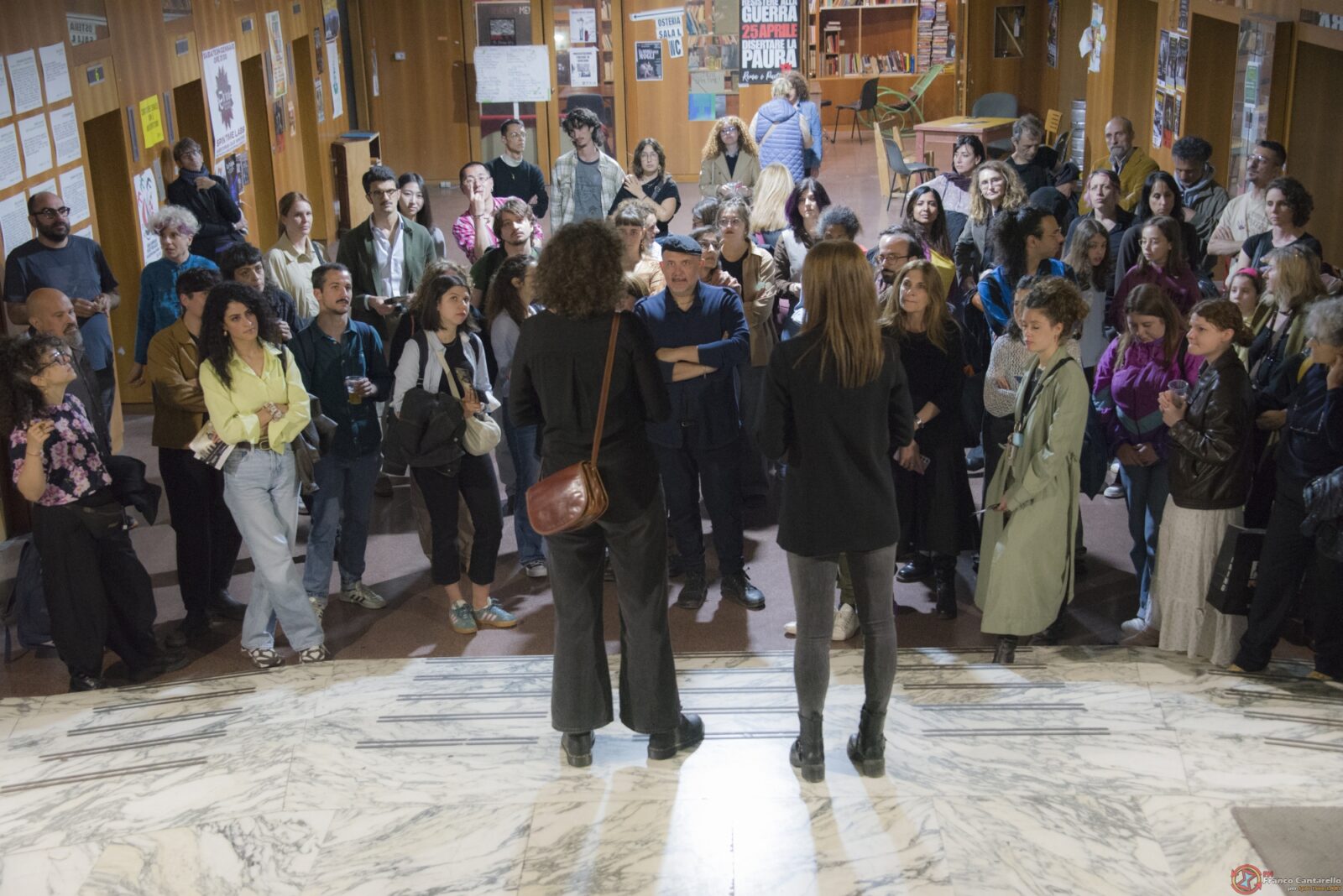
The discussion concluded with an invitation for the audience to continue informal conversations and to view the masks up close.