Discussion on ageing and Crippletrek in Szombathely
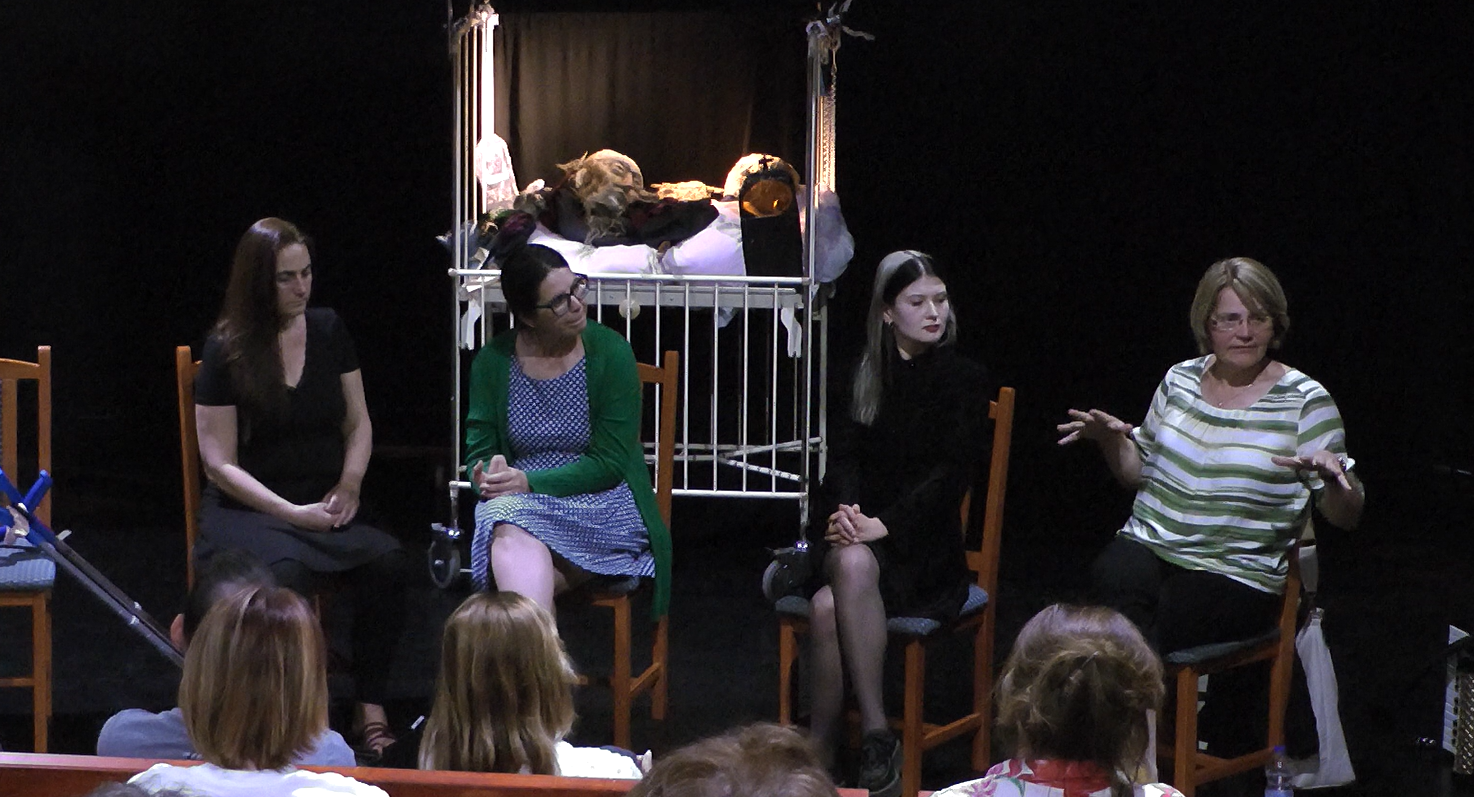
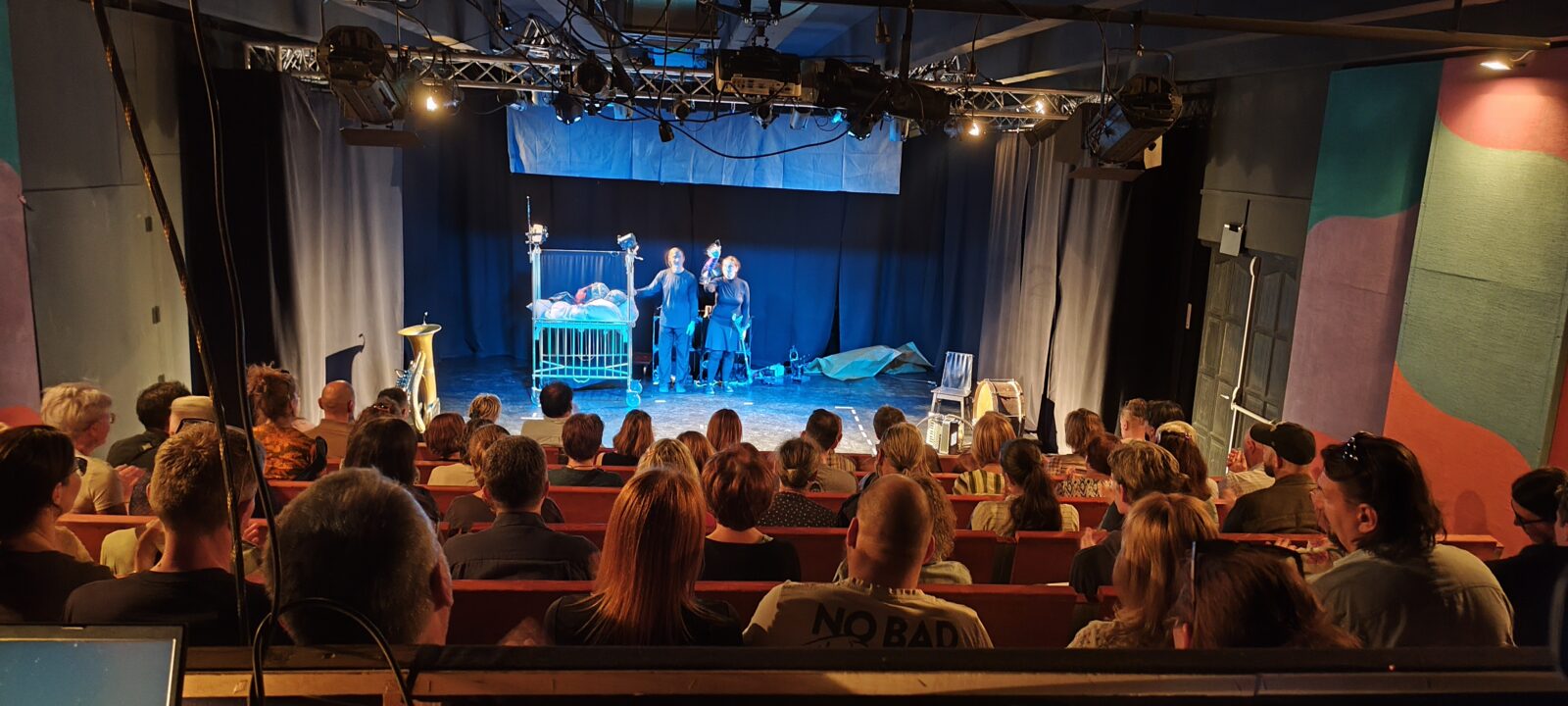
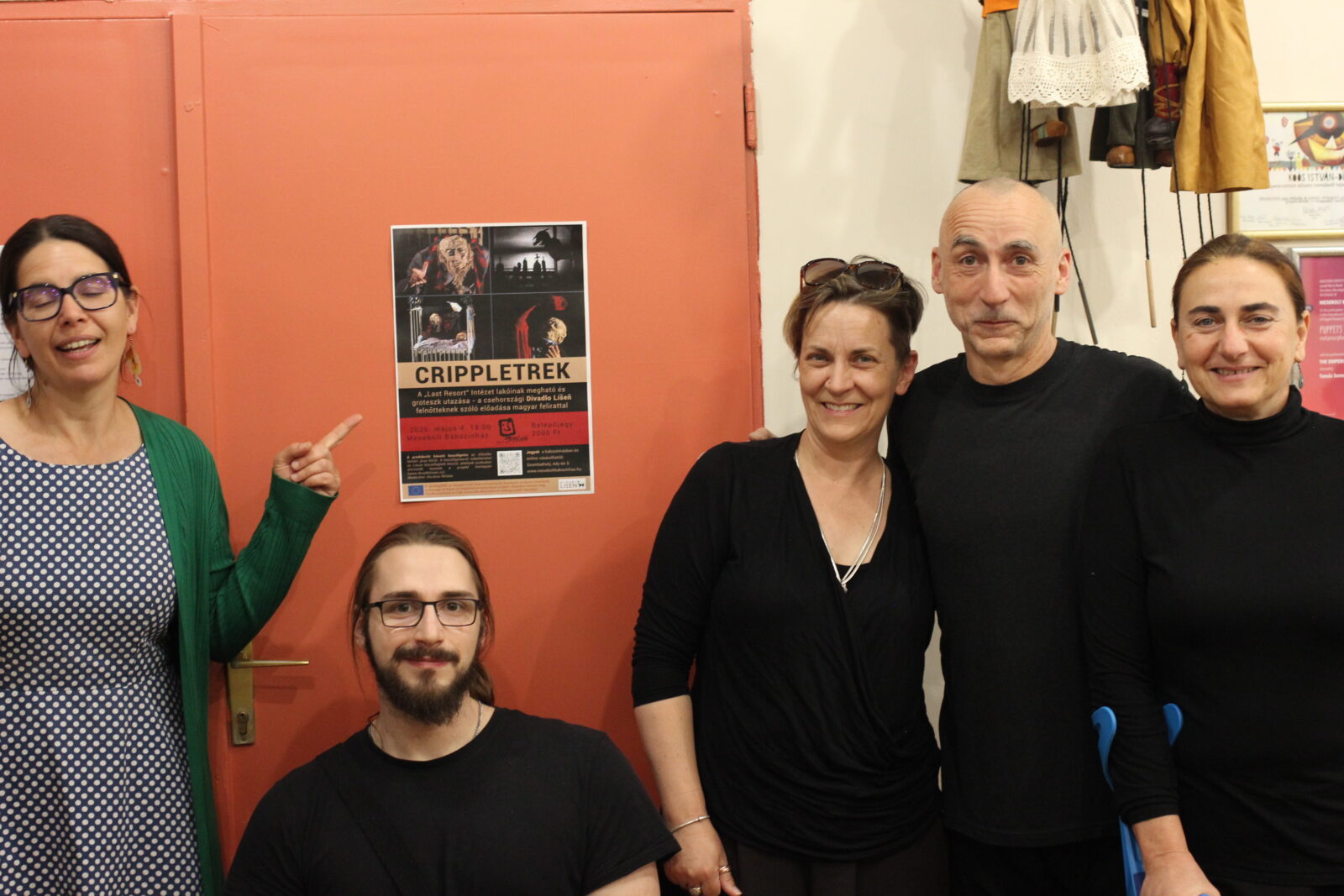
As part of the Courage to Know project, we presented the performance Crippletrek and held a post-show discussion focused on social issues connected with illness, helplessness, ageing, death, and loneliness. The event took place in cooperation with the project partner, Mesebolt Bábszínház.
Post-show discussion – summary
Speakers:
Tímea Dénes
Head of the Pálos Károly Social and Children’s Centre
Melinda Bede
PhD student in psychology at ELTE University. Her research focuses on the relationship between psychological well-being and cognitive functioning in older adults and their social environment, especially social support, inclusion, and loneliness.
Context and starting points of the discussion
The Theatre Líšeň performance Kriplštreka served as an impulse to open topics that are often suppressed both in Hungarian and Czech society. The production was based on documentary sources and the personal experiences of the creators, aiming to embody problems that society tends to refuse to address.
Psychological aspects of ageing and dying
Psychologist Melinda Bede and social worker Tímea Dénes discussed several key inner states experienced by elderly people:
Integrity of the self vs. despair:
According to Erik Erikson’s theory, the main task of old age is to achieve “ego integrity” — accepting one’s life as a whole, including both successes and failures. If this process fails and a person sees only wasted opportunities without the possibility of repair, they may fall into deep despair.
Fear of becoming a burden:
Older people are often less afraid of death itself than of the phase preceding it — the period when they become dependent on others and feel they are “a burden” to their family. This fear is strengthened by communication barriers within close relationships.
The paradox of silence:
Families often avoid conversations about death because of their own fear and anxiety, which leaves elderly people isolated in their concerns. When a senior begins to speak about the end of life, relatives frequently respond with an awkward smile and quickly close the topic, even though sharing these thoughts could bring relief.
Social isolation and economic reality
The discussion also addressed the very concrete living conditions of elderly people in Hungary:
Isolation vs. loneliness:
There is an important difference between these concepts. Isolation is a physical condition (for example, an immobile person living on the fourth floor without an elevator), whereas loneliness is a subjective feeling that can exist even within a family if meaningful communication is missing.
The role of outreach services:
For many isolated people, a meal delivery worker or caregiver may be their only social contact during the entire day. Even a short conversation and a smile can have a crucial impact on mental well-being.
Economic pressure:
The costs of dignified institutional elderly care are extremely high (amounts exceeding 350,000 HUF per month — approximately 23,000 CZK — were mentioned during the discussion). For seniors living alone, it is often impossible to cover rent and utilities from a single pension, leading to severe existential anxiety.
Paths toward solutions and active ageing
Despite the difficult themes, the participants also offered positive perspectives:
Humour as a tool:
Sensitive use of dark humour can release tension and make it possible to speak about taboo subjects with greater openness and distance.
Activation programmes:
In Szombathely, programmes such as “Active Ageing” enable seniors to tutor children, sing in choirs, or organise exhibitions of their own work. These activities restore a sense of usefulness and social recognition.
Intergenerational solidarity:
It is necessary to change society’s perspective and see old age not merely as a period of loss, but as a stage of life in which people can still remain active and valuable members of the community.
Critical observation:
The speakers agreed that until society becomes capable of speaking openly about death without fear and anxiety, elderly people will continue to suffer from isolation — even within the circle of their closest relatives.
Held as part of The Courage to Know project, Co-funded by the European Union.