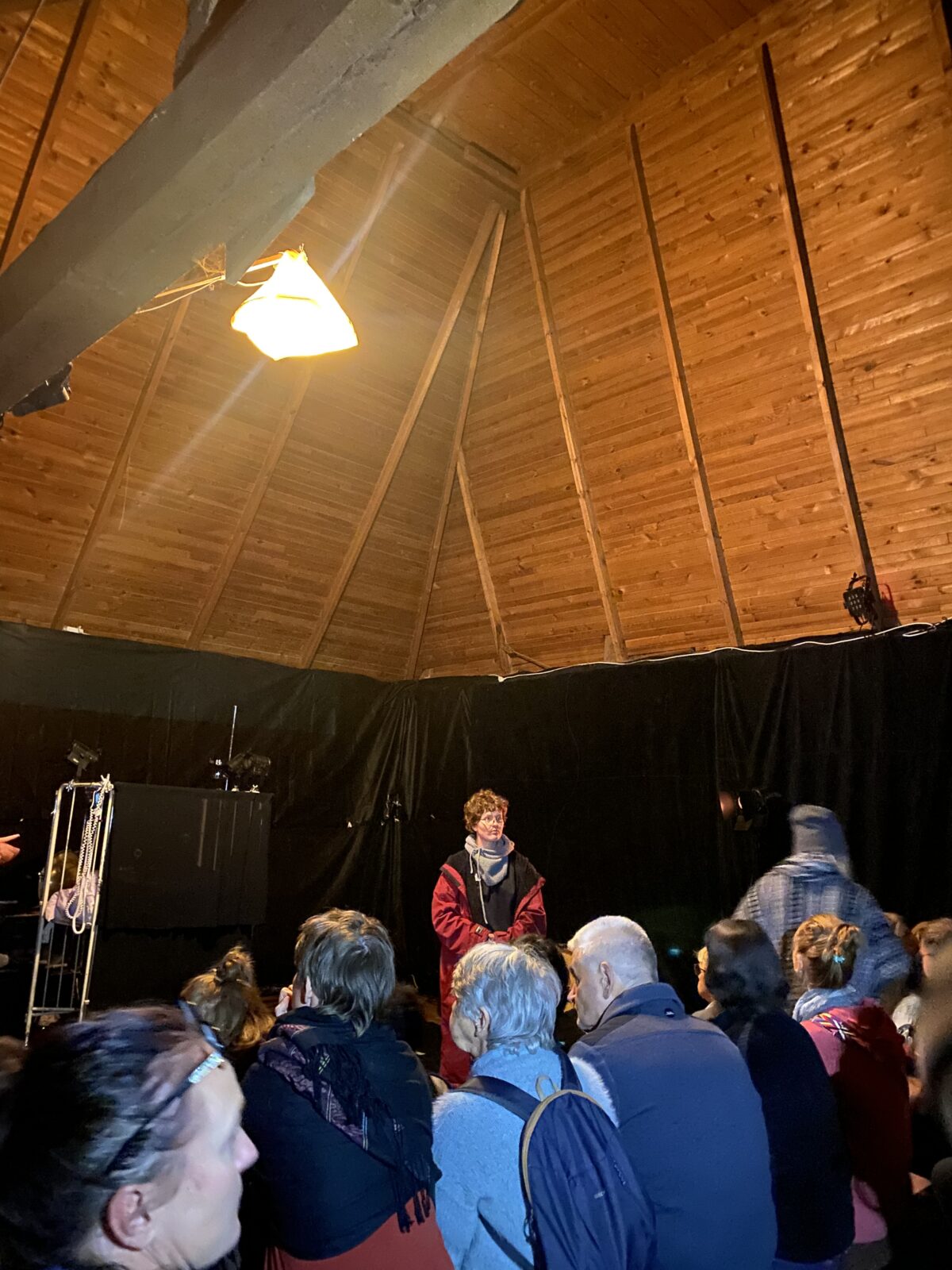
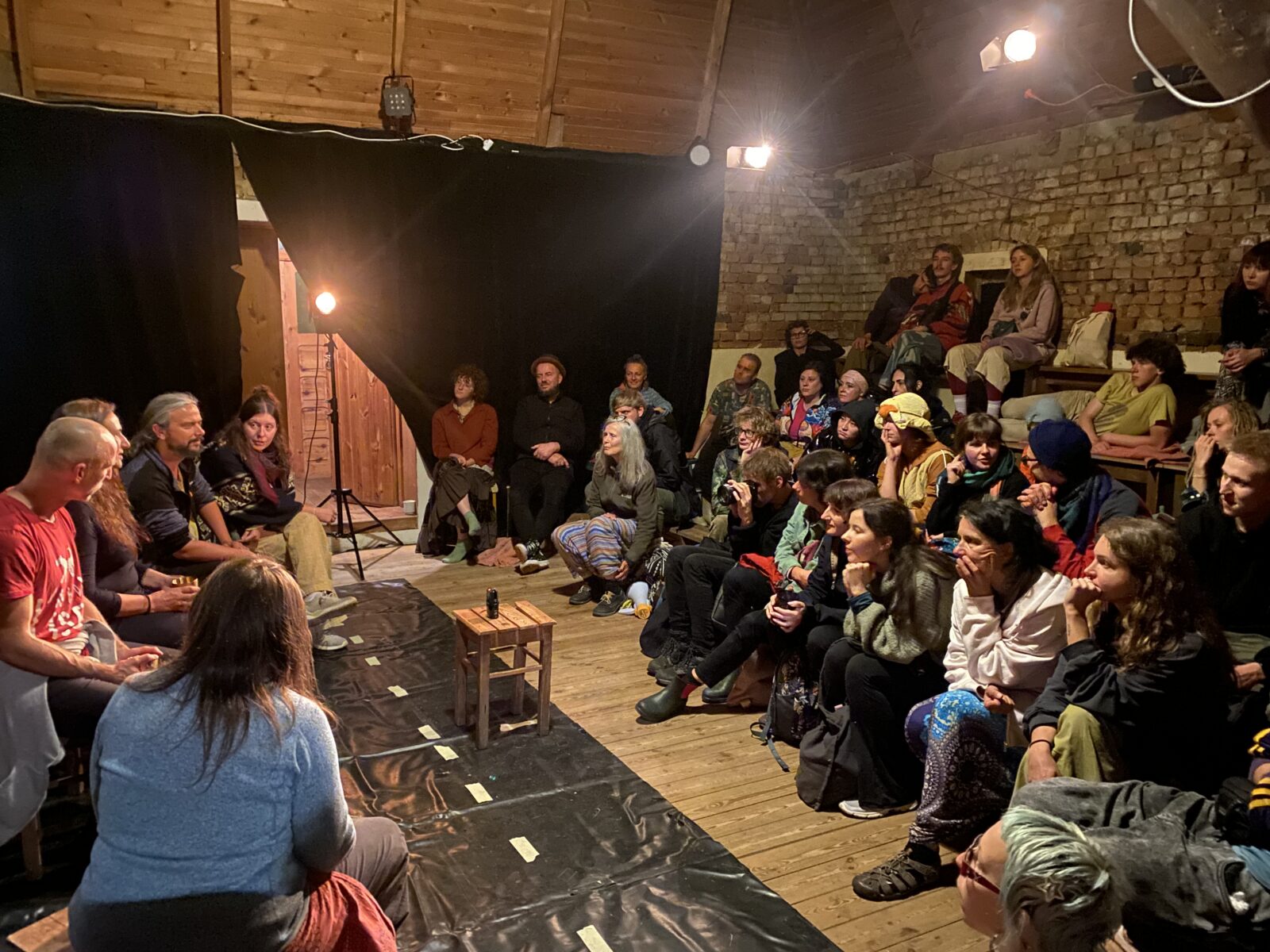
Discussion with theatre studies expert Magdalena Hasiuk and a performance of Crippletrek in Węgajty
Magdalena Hasiuk in discussion with Lisen Theatre
Discussion Overview:
Following the performance of Crippletrek at the Wioska Teatralna – Dialogues of Worlds international festival in Węgajty, Poland (organized by Teatr Węgajty), a post-show Q&A took place with the audience. The discussion was led by prominent Polish theatre researcher Magdalena Hasiuk from the Polish Academy of Sciences, who specializes long-term in socially engaged, community, and participatory theatre. The debate provided an insider look into the independent work of Divadlo Líšeň, addressing its specific dramaturgy, creative methods, visual language, and social impact.
The Wioska Teatralna festival, hosted by Teatr Węgajty, is a respected international showcase focused on fostering dialogue between different cultures, communities, and life experiences.
1. Profile and Dramaturgical Focus of Divadlo Líšeň
Divadlo Líšeň has been active on the independent scene for nearly thirty years. It was born out of a desire to create freely outside the established structures of traditional institutional state theatres. The group’s work follows two main creative lines: poetic performances on one hand, and engaged political productions addressing urgent contemporary topics on the other.
2. Creative Methods and Dramaturgical Specifics
A fundamental feature of the group’s work is an inverted creative process compared to standard theatre practice. While most theatres typically select a finished text or form and then look for meaning and content, Divadlo Líšeň starts from an internal drive and the need to express a specific human or social issue.
Themes develop through a long-term maturation process based on real stories, newspaper articles, documentaries, and testimonies from everyday life. Thorough research and work with source materials play an equally vital role in developing the script as improvisation during rehearsals.
3. Visual and Stage Elements: Masks, Puppets, and Props
The visual component—working with puppets, masks, and objects—plays a key role in the group’s productions. The artistic evolution of the visual elements for Crippletrek shifted from aesthetically perfect masks toward a rougher, more raw style. A major inspiration was the German theatre Westflügel, which explores working with discarded objects and trash. This approach allowed the creation of masks and puppets that are more direct in their expression.
Strong emphasis is also placed on the authenticity of the setting and objects. The scenography features real historical and utilitarian items, such as an adjustable crib from an infant care institution or a military tent. Searching for props in army surplus stores and flea markets led to humorous moments, including instances where sellers offered fully functional heavy military vehicles (such as tanks) at a discount alongside the tents.
4. Socio-Political Dimension and the Production „Putin is Skiing“
A major topic of the discussion was the play Putin is Skiing, created over 17 years ago based on the book and articles by the murdered Russian journalist Anna Politkovskaya.
The production captures Vladimir Putin’s rise to power and the suppression of human rights. Public perception of the play has evolved significantly over time:
After its premiere, the response was lukewarm, as people did not understand the motivation behind creating such a play and viewed Putin as a standard European politician. Following the events in Crimea and the 2022 invasion, interest in the performance skyrocketed, making it highly requested. The theatre donates the proceeds from these performances to humanitarian aid for Ukraine on an ongoing basis.
5. Audience Perception, Ethical Questions, and Community Impact
The debate addressed how audiences respond to heavy and dark themes such as severe illness, charlatanism, or political oppression. Reception is highly individual: some audience members find relief and perspective in the productions, while others (such as the older generation) perceive the message as purely tragic and deeply serious. On a political level, the discussion emphasized the rejection of collective guilt toward the Russian nation and the need to highlight specific individuals who sacrificed their lives fighting for the truth.
Beyond the stage, the impact of their work shows in civic activism in Brno-Líšeň, where the group previously managed to save the local community center from demolition, protect a garden with old linden trees from urban development, and revive traditional folk festivals (Carnival).